Thursday, October 30, 2008

Sweatshops


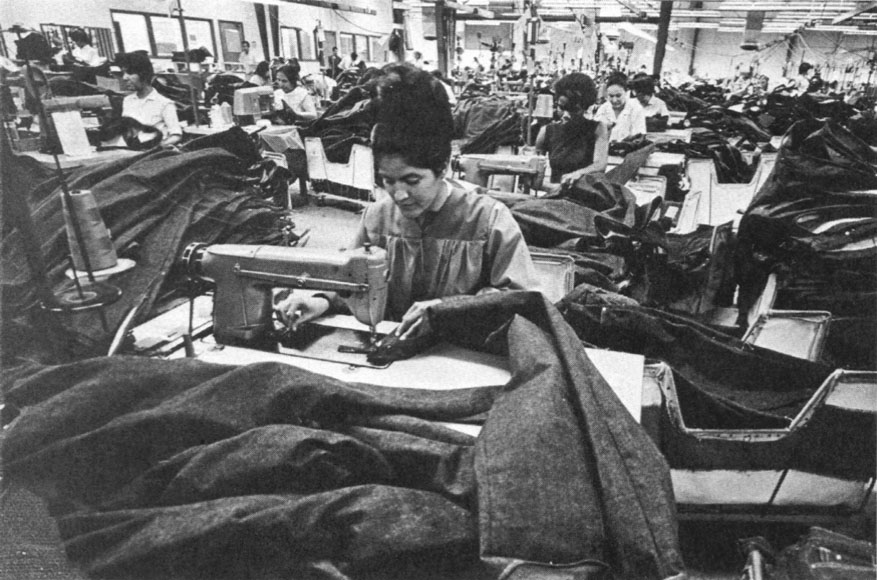
Sweatshops are all over the world, however many people are not aware of it. Typically whenever someone heres the word sweatshop, they automatically think about third world countries and workers doing jobs under terrible and hazardous conditions, just to

earn what we would consider scraps. The truth is that sweatshops are a global issue at hand. They are not only in third world countries, but in also second and even first world countries as well.

So, what exactly is a sweatshop? Well informally a sweatshop is a facility to say the least, where workers do average and sometimes highly skilled work for less than the proper pay, while doing so in sometimes horribly terrible working conditions, which can be air pollution, machine hazadards, or anything that would in some way impair working. However more formally, according to Merium Websters Dictionary a sweatshop is, " shop or factory in which employees work for long hours at low wages and under unhealthy conditions."

I do not know much more than probably the average person about sweatshops, and therefore I could not possibly provide you with all the required information about them. So, instead below are some basic knowledge facts about sweatshops as provided by http://users.wpi.edu/~justice/
aka, Justice League News.


Sweatshop Facts and Statistics

* The university clothing industry is worth over $3 billion dollars annually. Most of those clothes are manufactured in sweatshops.

* Sweatshop workers earn as little as one half to one fourth of what they need to provide for basic nutrition, shelter, energy, clothing, education, and transportation.

* In order to meet the basic nutritional needs of their families, sweatshop workers spend between 50-75% of their income on food alone.

* Worker wages typically account for 1-1.5% of the final retail cost of a garment. For example, a worker is typically paid 25 cents to make a $20 shirt. If the price were raised to $20.25, the brand could double the worker's salary with no loss of profit.

* Almost 75% of the retail price of a garment is pure profit for the manufacturer and retailer. That means that if the manufacturer absorbed the cost to double a worker's salary (as in the example above), their profit would decrease only to $14.75 instead of $15.

* Nike Chairman Phil Knight makes $14,000 a day; An Indonesian garment worker makes $2.50 a day.

* For less than 1% of Nike's advertising budget, wages could be doubled for all workers making Nike university clothing.

* According to US government data, in the past 10 years the price for cotton-knit shirts paid by US brands to factories has fallen 50%, on average. This drop in price has not been reflected in consumer retail prices.

There are many companies who take control of sweatshop workers, so next time you buy something, just consider the true price that garment costs to make!


Pictures:
Top Right:http://www.easternct.edu/depts/edu/textbooks/glimpse.jpg
Lower Right:http://www.latinamericanstudies.org/immigration/sweatshop.jpg

Monday, October 27, 2008

There were several designers from the Milan fashion week that stood out to me, but for various reasons. Mainly, because I either really liked their collections, or that I really did not like the collections they presented.

The first collection that I liked and would totally wear was the La Perla Spring ready to wear collection. The collection was primarily consisted of white, black and the use of blue. Overall the design was clean and natural in appearance. Almost as if it were effortless. Some of the pieces were dresser than others, given that they probably had some added sparkle with a beading or sequin detail or pattern to them. There was a great use of a 'Jesus' sandle type heeled shoe, that went well with the natural white looks, that really served in compliment to the garment.


The next designer that I liked was Salvatore Ferragamo. What really made it for me was the use of silky, flowy fabrics which helped create a clean, classy and very chike look. Alot of the garment involved draping, which helped add body to the garment without adding the appearance of addtional body to the actual model. There were not as many individual pieces as some of the other collections, but that was because the collection was very simple and streamline in effect. While the draping and cuts appeared simple, a bold touch of color, and in the case with one very covered dress, an all over tiger print was added to make standout pieces. There were very few accessories, but the shoes were very cute and simple as well, being strappy heels, giving a light feel to the foot, not at all making it seem heavy, which would have taken away from the lightness and ease of the overall outfits.


One of the collections that I rather did not like was the Marni collection. It was to funkadoodle for my personal taste. I will however give it one thing, it definately caught my eye and was fun to got through, however it took a while to appreciate the creativity behind it. There was a great use of dots, stripes, and all sorts of bold patterns. There were alot of pieces with a whole bunch of accessories all hodge podged together to create looks. Alot of the patterns were very reminiscent of the 70's. After looking through the collection I no longer was completly taken back by it, but found that if dissected, each look contained various pieces that were great, but I personally would not put them all together, but thats probably the designers overall aim:) Basically from head to toe it was all to much!


Pictures Cited:
La Perla:
Salavtore Ferragamo:


Wednesday, October 22, 2008

Fashion: Art or Usuability


Fashion. To most people fashion is merely throwing on a t-shirt and jeans in the morning without thought or hesitation, and then heading out the door to start their day. They really do not think much about the 'fashions' they wear, which bear testament to that fact. To them, they might think that fashion/clothes are simply a matter of usability. They wear clothes simply because they have to, our society has rules and such about matters that pertain to fashions. Yes they are right, clothes are usable and have a certain value to them. However, there are many a people out in the world who would agree, that clothes and fashion are usable, but would also go beyond that to make a point that clothes are also art.


In my personal opinion, why can not clothes and fashion be both usable and art? Usable art. Surely it is the most usable kind of art aside from just aesthetic value. Think of all the art museums in the world, there are quite a bit to say the least! However, you can not wear a sculpture, the Cysteine Chapel ceiling, or the Mona Lisa. They are simply images and figures for our viewing pleasures, but clothes can be art, that is just as beautiful as the previously mentioned, but have additional purpose in that we can wear the latest fashion trend, and those more privilege sport the latest couture of pieces. Every culture is different to some degree and it is this difference that fashion truly fluoresces and advances! Without a difference in dress, fashion probably would not be as important and diverse as it is. It is what makes us similar, different, feel beautiful, feel sad, feel comfort, and connects us all together on a global scale.


So it is for that reason that I believe clothing and fashion are in deed art and perhaps even the most 'usable' of all art. Aside from that, fashion is an outlet for design, invention, and mastery. It should be the expression of an artist, being a designer, just like a painter paints with oils, a sculpture sculpts with clay, does a designer create wearable, usable, fashions. Also, regardless of the fact that we have to wear clothes by law, we should want to be exposures and advertisements of art, through out creativity with fashion and clothing!

Thursday, October 2, 2008

Inspirational Designs


What inspires me? That is easily a complex yet simple question to answer. For starters there are many things that inspire myself. It can be a simple as color. For example I absolutely love to see the true colors of leaves in the Autumn as they unveil their hidden hues of red, orange, yellow, and brown that lay dormant in the Spring, Summer, and Winter seasons. Inspiration can also come from a song or quote or even movie that really hits home with yourself. Mainly though, I would have to say that most of my inspiration comes from ideals and emotions.


For example I love nothing more than a nice crispness to the air when the sun is high in the heavens. Its warmth evokes overwhelming joy and happiness. The breeze that provides the slight crisp air blowing around, just sends me to a place in my head where there are flowers and trees and I am happily swinging to the motions of the earths goodness, and all is right in the world. For this savored moment I would create a lovely versatile dress. The mood is sunny, bright and warm, so for color I would use a subtle yellow, more so closer to mustard than to a summery yellow because the crisp air alludes to the approach of fall. The dress would hit right at the knee, this provides length for those winder days, and a certain touch of modesty that has been lost in allot of fashions today. It would be of the casual nature, however it would not be made out of a jersey knit material, but rather a pure cotton or cotton blend, making the dress very breathable. It would be cut with a pinched cap sleeve, which would be perfect for warm weather and also easily paired with a jacket for windy air, without the unpleasant sleeve bunching that often at times occurs. The dress would be A-line in shape, with a slight notion of pleats in the front. The dress would be simple, breezy, comfortable, and easily dressed up or down depending on the time of the day. It would be the ultimate compliment to a brisk walk on a sunny Autumn day!